-
How ISO 2768 General Tolerances works: a practical explanation
ISO 2768 General Tolerances is a standard that sets the tolerance for dimensions that have no individual tolerance on the drawing It is used for keeping a drawing readable, by not dimensioning every non critical size. Ty
Details -
How First Article Inspection works: a practical explanation
First Article Inspection is a full dimensional check of the first part from a new setup, reported against the drawing It is used for proving that the process can make the part before the batch is committed. Typical value
Details -
How EN 10204 Material Certificates works: a practical explanation
EN 10204 Material Certificates is a standard that defines the type of inspection document supplied with a material It is used for proving that the material in the part is what the drawing called for. Typical values: type
Details -
How PPAP Submission works: a practical explanation
PPAP Submission is the production part approval process used in the automotive supply chain, at four levels of evidence It is used for proving that a production process can make the part repeatedly, before series supply
Details -
CNC Milling Machine specifications: what the numbers mean
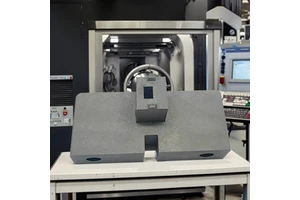
CNC Milling Machine is a machine tool that removes material with a rotating cutter while the workpiece is clamped to a moving table It is used for producing prismatic parts, pockets, slots and contoured faces to a drawin
Details -
How Hydraulic Manifolds works: a practical explanation
Hydraulic Manifolds is a block with drilled and ported passages that connects valves, pumps and actuators It is used for replacing pipework with a single machined block, in mobile and industrial hydraulics. Typical value
Details -
How C3604 Brass works: a practical explanation
C3604 Brass is a free cutting brass with lead, the standard choice for turned parts that have to be fast to make It is used for fittings, connectors and turned components where machinability drives the cost. Typical valu
Details -
How Heat Sinks works: a practical explanation
Heat Sinks is a machined or extruded finned body that carries heat away from a component It is used for power electronics, LED assemblies and any enclosure that generates heat. Typical values: material aluminium, or copp
Details -
How Mould Inserts works: a practical explanation
Mould Inserts is a replaceable steel component that forms part of a mould cavity It is used for moulds where a wear area, a core or a detail needs to be replaced or machined separately. Typical values: material H13, or a
Details -
How Geometric Dimensioning and Tolerancing works: a practical explanation
Geometric Dimensioning and Tolerancing is a symbolic language on the drawing that controls form, orientation and position It is used for saying what a part actually has to do, instead of relying on plus minus dimensions
Details
Search: