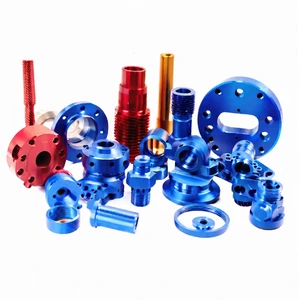
A Swiss-Type Screw Machine supports the workpiece close to the cutting point, which is how slender parts keep their diameter and straightness instead of deflecting away from the tool. Supplied to medical implant makers, this Swiss-Type Screw Machine is configured with a bar feeder and parts catcher. sliding head turning with a guide bushing and live tooling is carried out on equipment that holds ±0.005 mm across a full shift, not only on a first piece.
Tolerance is applied where it does work rather than across the whole drawing. Critical features are held to ±0.005 mm, non-critical dimensions follow the general machining tolerance, and the difference is stated in the quotation rather than discovered later.
Specification
| Process | Sliding head turning with a guide bushing and live tooling |
|---|---|
| Material / configuration | a bar feeder and parts catcher |
| Size / capacity | concentricity within 0.01 mm |
| Tolerance | ±0.005 mm |
| Surface finish | turned finish, Ra 0.4–0.8 µm |
| Application | swiss-type screw machine for medical implant makers |
| Inspection | Dimensional report, material certificate, first article report on request |
| Lead time | 7–15 working days for samples, 3–4 weeks for production |
| Minimum order | 1 piece for prototypes, from 50 pieces for production pricing |
Manufacturing process
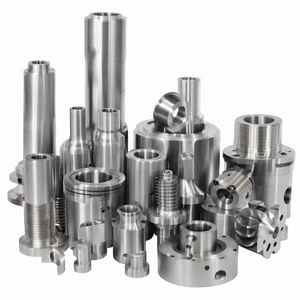
Work is carried out with sliding head turning with a guide bushing and live tooling. Tooling, speeds and fixturing are recorded with the part number, so a repeat order starts from a proven process instead of a fresh setup.
Material is purchased against a certificate and checked on receipt, so the composition is known before any cutting starts. Work in progress is identified by part number and operation, and the finished parts are deburred, cleaned and protected before they leave the machine area.
Typical applications
Most of the work supplied in this category falls into the following examples.
- Bone screws and orthopaedic pins.
- Connector pins and contacts.
- Micro shafts for instruments.
- Fuel injector components.
- Watch and instrument parts.
Quality control and documentation
Critical features are measured on calibrated equipment in a controlled room, and the results are filed with the job so that a repeat order can be compared with the first.
Material certificates to EN 10204 3.1, dimensional reports and first article inspection reports are issued with the shipment where the application requires them. Calibration dates and measurement uncertainty are recorded alongside every result.
Ordering, lead time and packaging
Packaging is specified by the part: individual protection for finished surfaces, separation for assemblies, and export crating with a packing list for shipment.
Frequently asked questions
When is a Swiss lathe better than a conventional lathe?
When the length to diameter ratio exceeds about 4:1. The guide bushing supports the bar a few millimetres from the cut, so slender parts hold diameter where a chucking lathe would taper.
Can a part be completed in one cycle?
Usually yes. Live tooling, a C-axis and a sub-spindle allow back working, so turning, cross drilling, milling and parting off all happen before the part leaves the machine.
Do you keep tooling and programmes for repeat orders?
Fixtures, tool lists and verified CAM programmes are retained for the life of the part number, so a repeat release runs on the same setup as the first batch without a new proving run.
Drawings are reviewed for manufacturability before quotation, and any feature that adds cost without adding function is pointed out at that stage rather than after the parts are made.