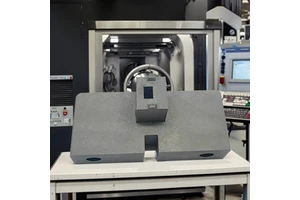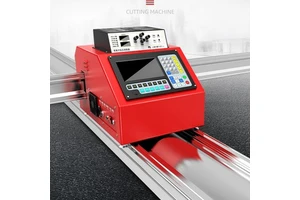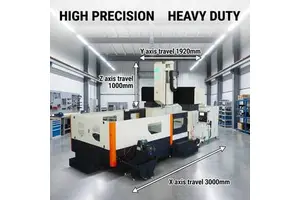

A Robot Cell with Part Inspection keeps the spindle cutting while nobody is standing in front of the machine, which is measured in spindle hours per day rather than in cycle time. Supplied to contract machining companies, this Robot Cell with Part Inspection is configured with an integrated probe and reject chute. robot integration with custom grippers, guarding and machine interface is carried out on equipment that holds repeatability ±0.05 mm across a full shift, not only on a first piece.
Tolerance is applied where it does work rather than across the whole drawing. Critical features are held to repeatability ±0.05 mm, non-critical dimensions follow the general machining tolerance, and the difference is stated in the quotation rather than discovered later.
Specification
| Process | Robot integration with custom grippers, guarding and machine interface |
|---|---|
| Material / configuration | an integrated probe and reject chute |
| Size / capacity | cycle times from 8 seconds |
| Tolerance | repeatability ±0.05 mm |
| Surface finish | anodised and powder coated frames |
| Application | robot cell with part inspection for contract machining companies |
| Inspection | Dimensional report, material certificate, first article report on request |
| Lead time | 7–15 working days for samples, 3–4 weeks for production |
| Minimum order | 1 piece for prototypes, from 50 pieces for production pricing |
Manufacturing process
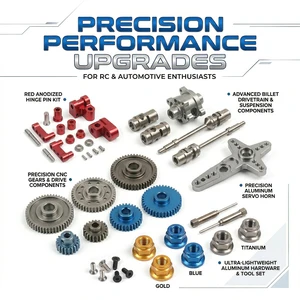
Work is carried out with robot integration with custom grippers, guarding and machine interface. Tooling, speeds and fixturing are recorded with the part number, so a repeat order starts from a proven process instead of a fresh setup.
Material is purchased against a certificate and checked on receipt, so the composition is known before any cutting starts. Work in progress is identified by part number and operation, and the finished parts are deburred, cleaned and protected before they leave the machine area.
Typical applications
Most of the work supplied in this category falls into the following examples.
- Loading raw castings into machining centres.
- Unloading finished shafts from lathes.
- Transferring parts between two operations.
- Servicing injection moulding machines.
- Deburring and washing before packing.
Quality control and documentation
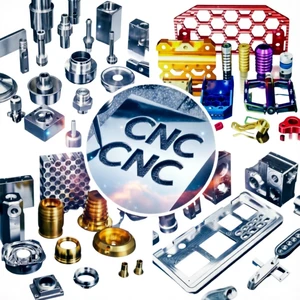
Critical features are measured on calibrated equipment in a controlled room, and the results are filed with the job so that a repeat order can be compared with the first.
Material certificates to EN 10204 3.1, dimensional reports and first article inspection reports are issued with the shipment where the application requires them. Calibration dates and measurement uncertainty are recorded alongside every result.
Ordering, lead time and packaging
Packaging is specified by the part: individual protection for finished surfaces, separation for assemblies, and export crating with a packing list for shipment.
Frequently asked questions
How much output does machine tending really add?
It converts breaks, changeovers and unattended hours into cutting time. Spindle utilisation typically moves from around 45 per cent to above 80 per cent without changing the process.
What stops a robot cell from running unattended?
Part presentation and recovery, not the robot. Grippers, Input-output handshakes with the machine control and a defined restart routine decide whether faults clear themselves.
How long does delivery take?
Sample parts are typically shipped in 7 to 15 working days after drawing approval. Production batches run 3 to 4 weeks depending on quantity, finishing and inspection requirements.
Drawings are reviewed for manufacturability before quotation, and any feature that adds cost without adding function is pointed out at that stage rather than after the parts are made.