Types of 304 Stainless Steel and how to choose between them
304 Stainless Steel is the general purpose austenitic stainless steel, with chromium and nickel. It is used for general corrosion resistant parts where the chloride resistance of 316L is not needed. This entry explains what it is, what the numbers on a data sheet mean, and what to put on a drawing.
It is written from the point of view of the buyer and the drawing office: the values that are realistic in production, the ones that cost money, and the way the result is verified. Where an industry sets the requirement, robotics is used as the example: repeatability across a family of near identical parts.
The main types
304 Stainless Steel is not one thing. The variants below differ in what they suit, and the choice is usually made on the part rather than on preference.
- Bar – suited to fasteners.
- Plate – suited to food preparation surfaces.
- Sheet – suited to architectural hardware.
- Tube – suited to general brackets.
How to choose
Start from the feature that has to work, then from the quantity. A robotics run suits one arrangement, a repeat run suits another, and the wrong choice shows up as cost rather than as failure.
The second question is what has to be measured. Where EN 10204 3.1 available applies, the inspection requirement usually decides the route before the machine does.
Comparison at a glance
| Parameter | Value |
|---|---|
| Tensile strength | 515 MPa |
| Yield strength | 205 MPa |
| Hardness | 170 HB |
| Density | 8.00 g/cm³ |
| Machinability | moderate, with a tendency to work harden |
| Corrosion resistance | good in most atmospheres, poor in salt water |
Applications
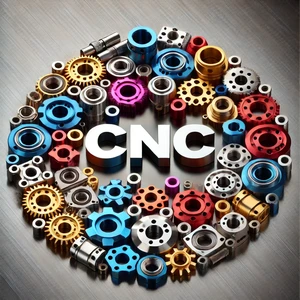
304 Stainless Steel is used for general corrosion resistant parts where the chloride resistance of 316L is not needed, and in practice it appears most often in fasteners, food preparation surfaces, architectural hardware, general brackets.
How it fits into a machining route
304 Stainless Steel is chosen at the drawing stage, and everything downstream follows from it: the tool geometry, the cutting data, the heat treatment and the certificate. Changing the grade later is a different part, not a different quote.The route is fixed before the first part is cut, and it is the route rather than the individual setting that holds the result: material cost is lower than 316L. Where a drawing calls for something the route cannot hold economically, that is raised at quotation rather than after the parts are made.
Standards, documentation and what is issued
The documentation requirement is EN 10204 3.1 available. Material is supplied against a certificate where the application calls for it, inspection results are recorded with the job, and the records are kept so that a repeat order can be compared with the first instead of being measured from scratch.
Standard dimensional inspection is the verification step. Where a customer format or a standard report is required, it is agreed before the batch starts, because a report written after the event is a report nobody can use.
Frequently asked questions
What tolerance should be specified for 304 Stainless Steel?
±0.02 mm is realistic in production. Tightening it beyond the functional requirement increases cost without improving the part.
Which material is usually used?
304 stainless steel is the usual choice, supplied against EN 10204 3.1 available.
How is the result verified?
Standard dimensional inspection, with the results recorded so a repeat order can be compared with the first.
What is the most common mistake?
Welding a thick section without considering carbide precipitation.
How long does it take and what does it cost?
A realistic cycle is moderate cutting speed, and the cost driver is material cost is lower than 316L.
Related capability
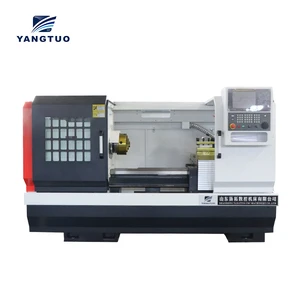
If you are specifying 304 Stainless Steel on a drawing and want a second opinion on the route, send the model and the quantity. The first response is a manufacturability review with the likely risk points and a quotation, so the decision can be made on facts rather than on a price alone.
Machining, inspection and documentation are handled in one place, which is why the dimensional report and the material certificate arrive with the parts rather than after them.
Related entries
These entries sit next to 304 Stainless Steel in the encyclopedia: 4140 Alloy Steel, PEEK, Hydraulic Manifolds. Reading them together gives a fuller picture of how the process, the material and the measurement affect each other.