How to Choose Swiss-Type CNC Turning: A Buyer's Guide for Machine Shops and OEMs
A practical buyer's guide to Swiss-type CNC turning: what the process does, the results you can expect, and the questions to ask before committing to a machine, a supplier or a production programme.
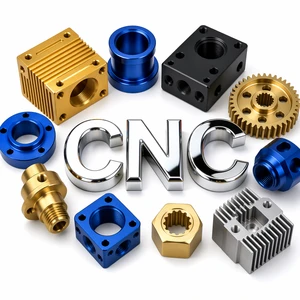
What Swiss-Type CNC Turning does
Swiss-Type CNC Turning is a sliding headstock with a guide bushing supporting slender parts, and in a production shop it is chosen because it delivers diameters held to plus or minus 0.005 mm on parts under 20 mm.
That definition matters more than any brochure, because it tells you which parts the process suits and which ones it does not.
Matching capability to your parts
Start from the parts you actually run: size, material, batch quantity and the tolerance that appears on the drawing rather than the tolerance you would like to see.
A process that is ideal for a 2 mm wall aluminium housing may be slow and expensive on a hardened steel shaft, and the honest answer is often a second process.
Machine, control and tooling
Look at spindle power, speed range, axis travels and control features, and check whether probing, tool setting and coolant options are included or priced separately.
Tooling is a running cost rather than a one-off, so ask what the annual spend looks like at your own mix of materials.
Questions to ask before you commit
Ask for a test cut on your own part, the measurement report behind it, the cycle time achieved and the tooling used to achieve it.
Ask how long programming and setup take for a new part, because on small batches that is where the real cost sits.
Judge total cost, not headline price
Purchase price is one line in a five-year cost that also includes tooling, maintenance, energy, scrap, floor space and the operator time needed to keep the process stable.
A slightly more capable machine that completes a part in one setup usually costs less per finished piece than the cheapest option that needs three.
Summary
Handled as a checklist, every point above costs little and prevents the arguments that start when a batch is already late.