Practical Ways to Improve CNC Punching: Accuracy, Cycle Time and Tool Life
Practical improvements for CNC punching: standardised setups, controlled cutting data, on-machine measurement, disciplined tooling records and a short review after every job.
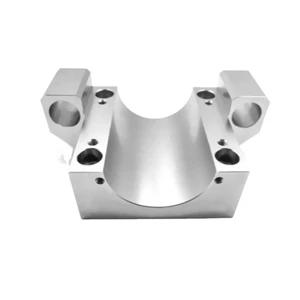
Standardise the setup
Documented setups with fixed datums, torque figures and preset tooling remove the variation that causes most dimensional problems.
Once a job has run well, write down exactly how it was set up, including holder and stick-out.
Control the cutting data
Use the toolmaker's data as a starting point, then tune for your machine, your material batch and your holder, rather than copying figures from an unrelated job.
Keep the proven parameters in the programme header so the next operator inherits the knowledge.
Measure on the machine
Probing before, during and after the cut turns guessing into control, and it is the single cheapest accuracy improvement available.
For CNC punching, in-process measurement is what allows hole-to-edge accuracy of plus or minus 0.1 mm at high hit rates to be held across a long run without constant operator intervention.
Manage tooling records
Track tool life by part count rather than by opinion, and replace tools before they fail rather than after.
A tool management system with preset lengths also shortens setup, which is where most small-batch cost sits.
Review every job afterwards
A ten-minute review of cycle time, scrap and tool consumption after each batch finds more savings than any new machine purchase.
Record the change, run it again and keep the evidence, because improvements that are not written down get lost.
Summary
Used during planning and again before a batch ships, the points above prevent the most common and most expensive failures.