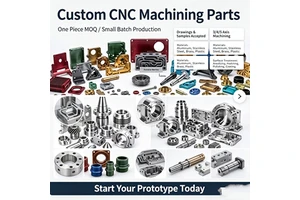
5-Axis CNC Machining Explained: Process, Parameters and What They Mean
A clear explanation of 5-axis CNC machining: the principle behind the process, the parameters that matter and how they change accuracy, surface finish and cycle time.
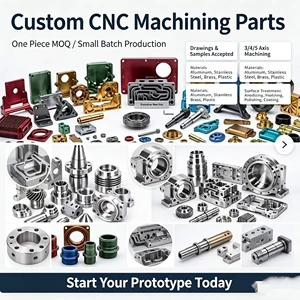
The basic principle
5-Axis CNC Machining is simultaneous movement on five axes so a complex part is completed in a single setup. Everything else follows from that principle, including what the process can hold and where it struggles.
In practice the shop sees contours held to plus or minus 0.02 mm without re-fixturing, which is the result that most customers are actually buying.
The parameters that matter
Cutting speed, feed per tooth, depth of cut and stepover decide metal removal rate, tool life and the finish left on the part, and they interact rather than work in isolation.
Changing one without revisiting the others is the most common reason a stable job suddenly starts producing scrap.
Tooling and setup
Tool geometry, coating, holder balance and stick-out all change the result, and a rigid setup will out-perform a clever toolpath every time.
Record what worked, including holder and stick-out, so the job can be repeated by someone else six months later.
Typical results
A well-planned operation delivers contours held to plus or minus 0.02 mm without re-fixturing, and those figures should be written into the process sheet rather than assumed.
Where a drawing asks for more, the usual answer is a second finishing operation rather than pushing the roughing cut harder.
Mistakes worth avoiding
The most expensive errors are a setup that moves under load, a tool that is too long for the job, and a programme that was never simulated on the real machine.
Each of these is cheap to prevent and expensive to discover on a finished batch.
Summary
The technical detail of 5-axis CNC machining is well understood. The discipline lies in writing it down, measuring it and keeping the evidence.