Precision Fixture Plate Cost-Down Programme: Lower Unit Cost Without Changing the Drawing
A cost-reduction case study on a fixture plate carrying an accurate hole grid: where the unit cost actually sat, what we changed in the process, the saving achieved and how the specified quality was protected.
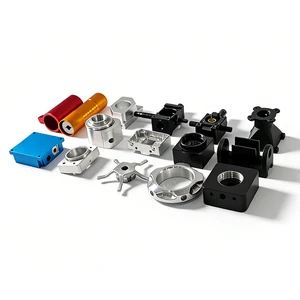
Starting point
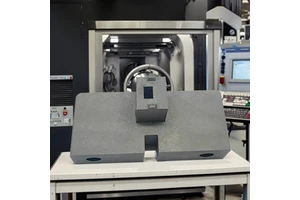
The customer was buying a fixture plate carrying an accurate hole grid at a price that made the assembly uncompetitive, but the drawing was frozen and could not be relaxed.
The first step was a full cost breakdown rather than a request for a discount.
Where the money was
The dominant costs were cycle time, an unnecessary finishing operation and the scrap rate at setup.
Material yield was also poor because the blank size had been chosen years earlier and never revisited.
What we changed
We re-programmed the roughing strategy to keep cutter load constant, combined two operations into one setup and reduced the blank to a near-net size.
A simple dedicated fixture removed most of the setup variation and the scrap that came with it.
The saving
Unit cost fell by roughly 25 per cent, with most of the saving coming from cycle time and yield rather than from margin.
The specified quality, grid position within 0.01 mm for repeatable clamping, was unchanged and was verified on the first production batch.
Protecting the quality
The customer re-inspected the first batch independently and found no difference in dimensional results or surface finish.
The change was documented in a revised process sheet so that the saving survives a change of operator.
Summary
Documented results, retained samples and a named contact on each side are what turned this from a one-off order into repeat business.