Surface Finish and Finishing for Aerospace Aluminium Bracket: A Case Study
A finishing case study on a structural bracket machined from 7075-T6 plate: the surface requirement, the machining strategy used to achieve it, the finishing operations applied, how the finish was inspected and how the parts were packed.
The finish requirement
The drawing specified both a dimensional requirement and a surface finish, and in this case the two were linked by function.
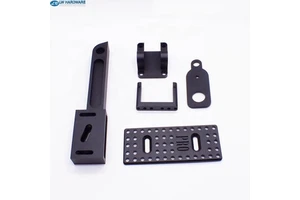
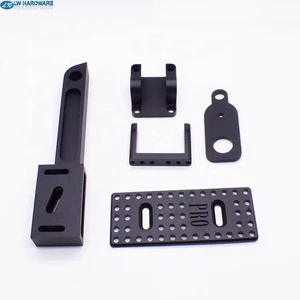
The part is a structural bracket machined from 7075-T6 plate, and the required result is 2 mm walls with a profile tolerance of plus or minus 0.05 mm.
Machining strategy
We separated roughing, semi-finishing and finishing, leaving a small even amount of stock for the final pass with a sharp tool.
Climb milling, a suitable stepover and a rigid setup produced a consistent finish before any secondary operation.
Finishing operations
Depending on the requirement, parts were deburred, bead blasted, polished or anodised, with masking applied to the surfaces that had to stay bare.
Threads and sealing faces were protected during finishing so that the assembly fit was not affected.
Inspecting the finish
Finish was checked with a roughness tester against the drawing value, supported by comparison plaques and photographs of the approved standard.
Visual standards were agreed with the customer in advance, because a written number alone rarely settles a cosmetic dispute.
Result and packing
Parts met the dimensional and cosmetic requirements on the first production batch and were packed individually to prevent transit damage.
The approved sample and photographs are retained as the reference for reorders.
Summary
This case shows the pattern behind most successful CNC programmes: decide the datums early, prove the process once, then measure what you ship.